Pages

Showing posts with label Writing. Show all posts

Wednesday, 1 November 2017

How Children Learn at School - Explanation

How Children Learn at School

Do you remember when you were a child and copying your friends or teacher by observing, you asked questions because you are curious, and took risks in school to learn? Learning is having courage to ask questions, so that you are able to make connections with your what you are talking about. Learning is important since you are growing your knowledge.

Children are good observers, they are able to watch and learn new skills. By watching, they are increasing the amount of knowledge they have. Children look up to role models so they can see new ways that they could learn.

Children ask questions because they are eager to learn more. Children are interested in a topic, so they try to understand it more and so they ask for help from their classmates or teachers, to make connections with their learning.

Children take risks so they understand what they’re learning about, some of the risks are things like, asking questions, and asking students for help. Since they ask other people, they are looking at different perspectives which will help them explore different ideas.

Many people have different learning styles, some watch videos, some read, some people ask their elder like teachers. To find your learning style, you have to find a way which makes you comfortable, like watching videos makes people comfortable because people are talking to you, with their opinions. You have to find something that makes sense to you. You could read, or even simply ask questions. Your learning style will help you understand, but everyone has different learning styles.

This is the explanation that Joshua, Hajera and I wrote about 'How Children Learn at School'. This was practice for our writing test. After we finished our explanation, we showed our writing to another group (Christopher and Jericho), who gave us feedback and feed forward.

Tuesday, 5 September 2017

Two Word Simple Sentences


On Monday, Ms. Kirkpatrick's writing group were looking at two word sentences. Two word sentences include a subject and verb. With the two word sentences, we were turning them into compound and complex sentences. 

Monday, 28 August 2017

Apostrophes - Writing Challenge

This weeks writing challenge was apostrophes. Apostrophes shows there is a contraction between two words. For an example, you could break down I would into I'd. This was great to revise because you could break down two words using apostrophes. 

Thursday, 10 August 2017

Idiom Writing Challenge

This week's writing challenge was idiom. Idioms are a set of words that have different meanings to what the person has said. For an example, when someone says to 'Break a leg', they don't actually mean to break a leg, they mean to try your hardest. 

Wednesday, 2 August 2017

Hyperbole Example

Hyperbole is a form of language feature used to exaggerate. I made a paragraph which included hyperbole about an unfortunate walk to home on a sunny day. I will add more hyperboles into my stories to make it more interesting and detailed. 

Monday, 22 May 2017

Metaphors

Today in writing we were focusing on metaphors. A metaphor compares two different things from one another. Example: She is a walking dictionary, this could probably mean that she is very educated with her vocabulary. 

Tuesday, 16 May 2017

Simple, Compound and Complex Sentences

Today we played a game based on simple, compound and complex sentences. I think that revising our simple, compound and complex sentences is great since we need to use these sentence structures in our writing. 

Monday, 15 May 2017

As Fast as Lightning - Similes


This week's language feature was similes. In this activity, we had to match the the correct similes together. I think this activity was great to revise our knowledge on similes, but it was quite easy since my group knows what similes are. 

Monday, 8 May 2017

Similes Illustration - It's as slow as a snail

Similes compares something with something else by using 'as' or 'like'. For this DLO, I showed an example of a simile. This simile compares how fast something is going, with how fast a snail goes. 

Thursday, 30 March 2017

Up! - Recount of High Ropes - Camp 2017

Up!
The crowd cheered, “Nazella, Nazella, Nazella!”
Each step made the beam wobble, just like my knees. I could feel my sweat rolling down my forehead. The view was so majestic, the flowers bloomed with perfection. I looked down and gulped. My group looked like the newborn ants.

I felt even more nervous after each step, I felt invincible, I was mixed with emotions. The roar grew louder and louder with some deadly suggestions while I was on the beam. I walked faster trying to get this over and done with. My heart was racing, each step caused a roar in the crowd. I rushed over to hug the pole. My heart raced faster than a cheetah. I wondered if I could do any trick, then JR shouted, ‘Do a pushup!’ What a coincidence. At first I was scared but then I remembered that camp was about trying new things and challenging yourself, so I got down, went into position then boom! I did it. I was so proud, like what?

At the end of the day, I had accomplished one of goals which I wanted to complete while I was at camp. Now, I feel invincible, I feel like I am wonder-woman.

This is my recount about my experience with the high ropes at camp. A goal I set for myself before we went to camp was to go up the high ropes. I was nervous at first, but I felt more confident after everyone started encouraging me.

Tuesday, 28 February 2017

Comparative and Superlative

Quick, quicker, quickest
Related image
Image result for deer running
Image result for cheetahs running
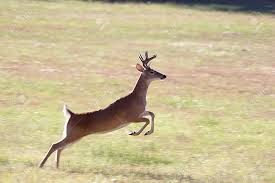
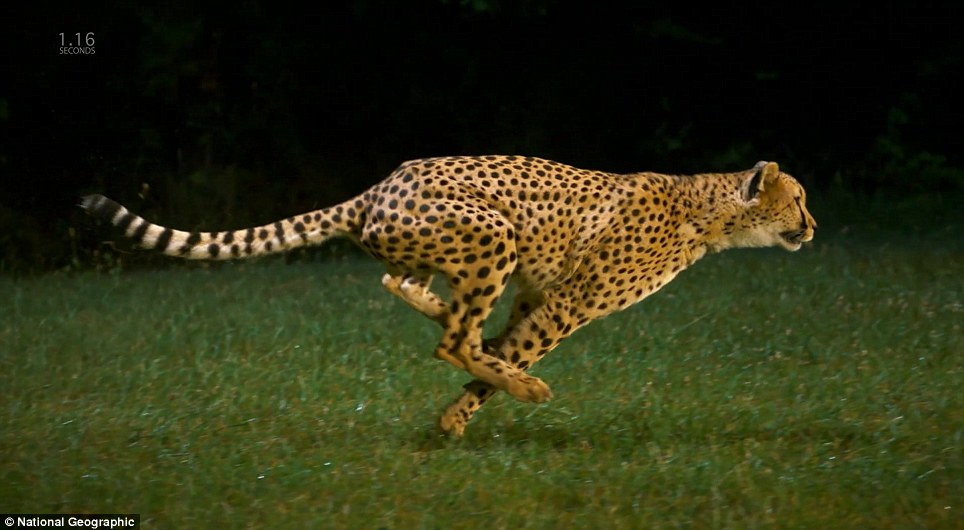
Today for writing we were focusing on our comparative and superlatives. We had to find the comparatives and superlatives for some adjectives like, smart, smarter, smartest. Comparative and superlative words are words that use iest, and ier. 

Wednesday, 7 December 2016

Procedural Writing about Straw Rockets


Last week on Friday, LS2 went to Tamaki College to make paper models and straw models of rockets. We first made straw rockets using two pieces of straw, one thick one thin, sellotape, scissors and rocket fins (paper). I had to write in procedural writing the steps. 

Tuesday, 15 November 2016

5 Minutes Of...


Yesterday for writing, we wrote about the Westpac helicopter picture which has a person being saved by the helicopter. We were looking at recounts and all the structures in the recounts. We had to find a partner and had 10 or more minutes to write a recount using the picture, I worked collaboratively with Zahra back to back, taking turns writing sentences. We used the TREE structure, Tittle, Reveal - 5 w's and h, Events - Time ordered events and Ending - How did it end?  

Wednesday, 21 September 2016

Quick Write


  Today, for writing we were writing a quick narrative with 6 (Max) sentences. We had to be very imaginative and creative. A story starter we used was, 'Once upon a time...' We did this activity to improve our narrative writing, or recapping what we were learning about narrative for next term. 

Thursday, 25 August 2016

Magic Box Poem

 
These past few weeks for writing we were focusing on the 'Magic Box poem' made by Kin Nisbett, our focus was description, we had to paint a picture in the reader's mind. We used powerful words to hook the audience in. We had to use verbs, and powerful adjectives. 

Monday, 4 July 2016

Scholastic Story Starters

Today for writing,  we were exploring the scholastic story starter. We had to spin a scrambler and to get our prompt. My prompt was, write a story about an owl who made a wish. I had lots of fun making the story! 

Tuesday, 28 June 2016

American Slavery Speech

American slavery is the worst thing that happened in American history. What do you think? I agree with this statement. I think that this was an awful thing that happened in history. I will be talking about how American slavery affected human rights, the slaves treatment as well as the amount of people who got killed. The tasks that these slaves had and information about the triangular slave trade.

American slavery affected human rights! Human rights is the rights you have simply because you’re human. American slavery was a type of slavery which was legal in America in the 1620 to 1865. Slaves weren’t free, they had to work or else they would be punished or worse murdered. How would you feel if this happened to you or your parents? This is why I state that American slavery is the worst thing that happened in American history.

The way these slaves got treated and the amount of people who died is absolutely disgusting! The way that these slaves were treated was very harsh! The owners of the slaves thought they could do anything to the slaves. They thought that this was ok. The white slave owners chose dark skinned people only because they hated them. Over 10 million people died either because they got, murdered, committed suicide, died because of the journeys around the atlantic sea, starved to death and more.

The work that some slaves had to do was very harsh. They would have to work day til night every single day. There were many jobs for the slaves like harvesting sugar canes, women would have to work in people’s houses and growing crops.

The triangular slave trade is about the trading between 3 continents, Europe, Africa and Americas. America offered raw materials like sugar and cotton to Europe, Europe offered Africa some manufactured goods, Africa on the other hand realised they didn’t have anything to give, so they just sent slaves to America. African tribes would kidnap people from different African tribes and send them to America. Many slaves on board got thrown out. Men on board got chained on the floor, sometimes they got chained to a shelf.

Do you see why slavery in America was so terrible? Most of the white, rich people kept on abusing the dark skinned people from Africa. Do you think that this is fair?

Today, we had to talk about our speech in our thinking groups. My speech was about my statement that I have chose, American slavery is the worst thing that happened in American history. Then after I said my speech, Calvin, Nesi and Evelyn chose how I did on a rubric. In the rubric I saw that I have to talk louder! 

Thursday, 19 May 2016

Information Report DLO

 This is my activity for writing this week, we had to make a DLO teaching someone else about structures, language features and note taking in an information report. For the couple of weeks, Miss Donaldson was teaching us about information reports. 

Friday, 13 May 2016

Paragraph about the shoes


Here is mine and Zahra's collaborative piece of writing. We had to plan, we had to use the 5 personification, smell, hear, feel, see and taste. After planning we had to sit back to back and take turns writing sentences. At the end we then did editing. Our LI: to use the 5 personification to help us paint a picture with words. We had to pretend that we were the shoes.

Wednesday, 4 May 2016

Identifying the structure of an information report


Identifying the structure of an information report

LI: to understand the structure of information reports

Your challenge:

Use the key to help you show the structure of an information report.

Highlight the introduction, body paragraphs and conclusion by changing the background colour of the table.

Highlight the other structures by using the highlight function.
Key
Introduction

Body Paragraphs

Interesting fact (to hook readers in)

Title of body paragraph

Description of topic

Topic sentence that tells the reader what the paragraph is about

Tell the reader what the report is about

Special knowledge to help the readers understand


Conclusion


Blue Whale

The blue whale is a type of mammal called a cetacean and is a type of baleen whale. The scientific name for the blue whale is the Balaenoptera musculus. Blue whales are by far the biggest animals in the world. Even the biggest dinosaur that ever lived doesn't come close in size to the blue whale.
Diet

To eat, blue whales filter their food through stiff, bony, comb-like teeth called baleen plates. Their main diet is krill (small creatures that are less than 2 cm in size). A blue whale can eat up to 3,600 kilograms of krill a day during its peak consumption period. Blue whales catch their food by diving down to about 500 meters below the surface.
Habitat

Blue whales are found in open oceans from the icy waters of the extreme Southern Hemisphere to the Aleutian Islands off Alaska at the northern boundary of the Pacific Ocean. Summers are spent in polar waters because food production is higher there.
Appearance

Blue whales are simply enormous. Their heart is the size of a small car. A blue whale aorta (the main blood vessel) alone is large enough for a human to crawl through. They can weigh over 200,000 kilograms! Female blue whales are generally larger than males. Blue whales are light bluish gray on their dorsal side and mottled gray whitish on their bellies. Some have yellowish bellies.
Endangered species

The worldwide blue whale population is not known, however, blue whales are considered endangered according to the U.S. Endangered Species Act. For many years blue whales were hunted extensively for their large quantities of baleen, blubber, and meat. Although blue whales are protected, their populations show few signs of recovery.
Blue whales are large mammals that spends their time in the icy oceans.  They only eat krill and are not a threat to any other creature in the ocean.  Blue whales face the risk of extinction if humans continue to hunt them for their baleen, blubber and meat.
This week for writing, our writing group were learning about information reports. We had to read the given information report and highlight the right things, with the right color. We worked independently.